Arrepentimiento
Inherent ViceArrepentimiento is Mickey Wolfmann’s unfinished desert settlement, conceived as a free-housing project and abandoned after his disappearance. A promise that anyone could claim an available unit becomes a skeletal construction site under threat of military aircraft; the place makes visible how an ideal of shelter can be undone by the same property and financial systems it sought to escape.
A city imagined as penance
Mickey Wolfmann’s desert ambition preceded the site itself. In Las Vegas, Fabian Fazzo describes Mickey as an old Vegas regular who had built a house near Red Rock and dreamed of putting up a whole city from scratch. The idea later takes a more pointed form: Puck Beaverton tells Doc that Mickey had lately talked of little else but Arrepentimiento, a Spanish word meaning “sorry about that.” Its founding conceit was that anyone could arrive, whoever they were, and live there free if a unit was open, overnight and indefinitely. Puck offers Doc a road map to the place, turning Mickey’s grand plan into a destination that can be approached, if not yet understood.
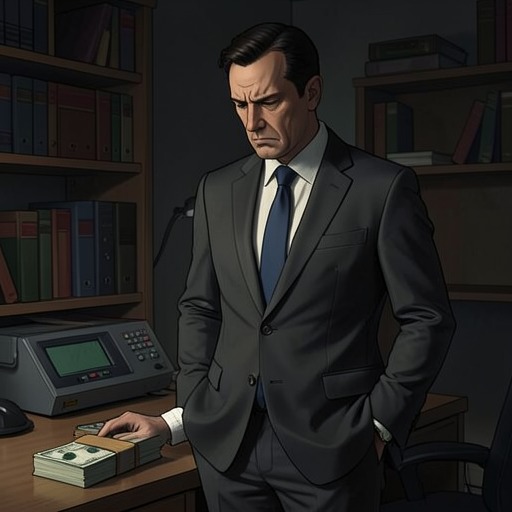
Mickey’s stated purpose was reparative. When Doc and Tito Stavrou finally see the settlement from a ridge, it appears in a valley where a river may have vanished centuries earlier. The narration casts it as Mickey’s penance for having once charged people for human shelter. That rationale gives the desert project a moral charge: the developer who made his fortune in housing imagines a place where shelter is no longer sold. But the plan’s dependence on Mickey’s money leaves the promise exposed to his changing circumstances and decisions.
The settlement on the ground
The route to Arrepentimiento leads off paved roads, through ranch tracks, dry washes, and a desert landscape of yucca, small cactuses, wildflowers, and distant rock formations. From the ridge, Doc and Tito see concrete structures scattered across marginally developed land, with a few smokestacks and chaparral beyond them. Several pointed, dome-like structures, which Riggs Warbling calls zomes, stand linked by covered walkways. Even their number resists certainty: Doc counts six, while Tito thinks there may be seven or eight. Giant, nearly spherical pink rocks lie between the men and the buildings, though they cannot tell whether the forms are natural or manufactured.
The approach makes the settlement look at once visionary and difficult to reach. Doc and Tito leave their car and walk across the exposed terrain wearing enormous souvenir sombreros, wary of the sun’s “dangerous rays.” As they get closer, the imagined city resolves into the remains of construction: sun-bleached scrap lumber, rusted cable spools, lengths of plastic pipe, tangled Romex, and a wrecked air compressor. Blown-away plastic sheeting exposes the framework beneath, alternately resembling an openwork soccer ball, a cactus pattern, or a seashell. The buildings promise an unfamiliar way of living, yet what Doc encounters is a project reduced to parts and unfinished surfaces.
Withdrawal, debt, and threatened erasure
At the time Mickey disappears, the project’s prospects collapse. Riggs says Mickey has pulled the money out and stiffed the contractors; everyone else has walked, leaving Riggs alone at Arrepentimiento. His account makes the link between the missing developer and the deserted site immediate: the settlement’s fate depends on a stream of funding that has abruptly stopped. The free-housing vision has not merely gone quiet; the people and work needed to complete it have been abandoned alongside it.
The site is also exposed to deliberate intimidation. Riggs tells Doc and Tito that fighter jets from Nellis pass overhead every half hour, day and night, in what he believes is authorized buzzing. He fears that Mickey will eventually approve a rocket strike and that the project will be destroyed along with its records. The threat is especially bitter because the danger would come through Mickey’s apparent cooperation, turning the missing man’s former dream into something its last occupant imagines could be erased by its own founder.
Mickey’s subsequent dealings in Las Vegas sharpen the contrast between Arrepentimiento’s free shelter and the commercial world he re-enters. Riggs describes Mickey buying a tiny parcel on the Strip, too small even for a parking lot, and proposing a “mini-casino” with one slot machine, one roulette wheel, and one blackjack table. A neighboring casino objects to the prospect of cheaper traffic and ultimately pays Mickey an enormous multiple of his purchase price. The proceeds are to finance renovation and expansion of the Kismet Casino and Lounge, where Mickey has become an active partner. Against that deal, the unfinished settlement stands as the abandoned counter-image of a business that can still generate money from property and gambling.
A contested geography of belonging
Arrepentimiento’s meaning is bound to the wider history of Los Angeles land use. Aunt Reet’s knowledge of property extends beyond deeds and contracts to the histories and conflicts that shape the land. In the account she and Doc share, Mexican families were displaced from Chavez Ravine to make way for Dodger Stadium, American Indians were swept from Bunker Hill for the Music Center, and Tariq Khalil’s neighborhood was bulldozed aside for Channel View Estates. Tariq places the displacement of his community within a longer racial history: during World War II, Japanese residents of South Central were sent to camps, and Black residents later moved into the neighborhood, only to face another removal. Arrepentimiento’s offer of shelter to anyone who could claim an open unit answers that history in principle, but its own collapse shows how fragile such an answer remains when it depends on an individual developer’s continued commitment.
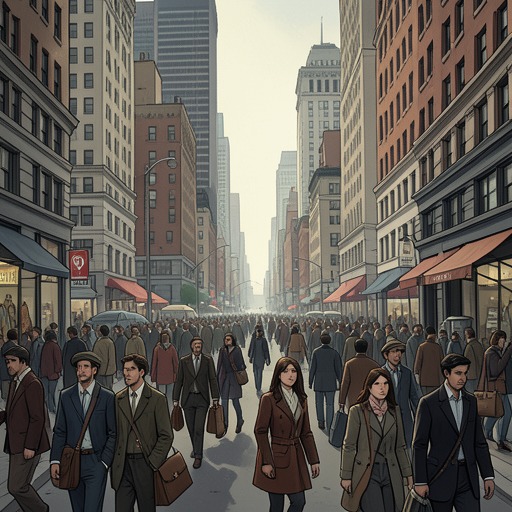
That struggle is visible not only in the remote desert but in the built landscape around Channel View Estates. Doc encounters the development as a planned community spreading across open ground: model units near the entrance, finished homes farther in, and new construction skeletons extending into unincorporated land. Its Spanish Colonial styling, red-tile roofs, and small balconies evoke more expensive coastal towns, while the development rises without shade trees beside a neglected, cut-off branch of the Dominguez Flood Control Channel. The name “A Michael Wolfmann Concept” marks the development as Mickey’s, yet the history behind it is not a neutral act of building: homes and streets occupy land from which an existing neighborhood was removed.
Crocker Fenway frames the conflict from the perspective of residential owners resisting developers, invoking environmental preservation and presenting high-density housing as a threat. Doc counters that the dispute is about property values. Crocker answers with a broader claim of possession: real estate, water rights, oil, and cheap labor have always belonged to people like him, while newcomers are a seemingly inexhaustible supply to be bought off and moved along. Arrepentimiento sits uneasily beside both arguments. It imagines access to housing outside ordinary purchase, but remains within a landscape where land, water, development, and the right to stay are fiercely contested.
An unfinished threshold
Riggs’s belief that the zomes can serve as doorways to other dimensions gives the abandoned architecture another possible function. He insists that the fighter jets, desert animals, and heat do not trouble him because he can leave whenever he wants by stepping through a door in one of the structures. Doc asks to look; Riggs warns him that the passage is not for everyone and could be dangerous. The exchange keeps the zomes suspended between construction technology and a promise of escape. Their physical frameworks are plainly visible, but what they might open onto remains Riggs’s conviction rather than something Doc confirms.
That tension gathers the settlement’s competing meanings without resolving them. Arrepentimiento is at once a real estate project, an expression of Mickey’s apparent remorse, a deserted worksite, and a place where the remaining structure can be imagined as a threshold out of the world that built it. Its unfinished state is not just an architectural detail: the free-housing promise has neither become a functioning community nor disappeared cleanly. The construction debris, unpaid workers, overhead aircraft, and uncertain doorways leave the reader with a place suspended between shelter and abandonment, and between the possibility of another social order and the forces that can withdraw its means of existence.